HISTORY REPEATING: White Nostalgia Makes a Comeback
In my article “A Primer on Visual Racism,” written as part of Dr. Tiffany Lin’s “24 Views – What They Call Us,” I argued that the power of visual racism lies in its ability to affirm authority, difference, and control. Depending on the producer's motives, imagery can subtly promote racial ideologies that shape mainstream society’s perceptions.
Consider the current administration’s Department of Labor posters. The colors, typography, and realistic illustrations evoke an idealized vision of American life—reminiscent of the black-and-white television shows of the 1950s. The posters feature proud, hard-working individuals—primarily white men—who confront the viewer with square jaws, broad shoulders, piercing eyes, and a direct gaze.
These images bear an interesting similarity to 1930s posters that celebrated Adolf Hitler’s vision of the ideal Aryan citizen. Those historical images attempted to define what the “perfect” German was supposed to look like. The Aryan race itself was a pseudoscientific construct that idealized Nordic physical features, characterized by tall men with blonde hair and blue eyes. Jewish people who did not fit this imposed standard were subjected to denigration, disenfranchisement, and ultimately genocide.
In comparing the posters, the most obvious difference is that the figures in the Aryan propaganda images typically possess blonde hair. In contrast, the current U.S. Department of Labor imagery features white men with more varied hair coloring and familiar American features such as cleft chins. Yet the deeper question remains: what message is quietly embedded within these images?
In truth, the message is not hidden at all.
“American” authority must remain paramount—and that authority is most often envisioned as a young white male. In visual culture, this social dynamic goes beyond posters. Public reaction to Bad Bunny performing at the Super Bowl Halftime Show revealed something deeper than musical preference. For some, the discomfort was not about his musicianship; it was about who gets to represent America on its largest stage. Who embodies the nation in front of the world?
Nostalgia is powerful. It promises a simple way of life, order, and stability. But nostalgia also uses a ‘red pencil’ when describing history. It selects which people, bodies, and narratives will be elevated and which will be overlooked.
One of the Dept of Labor posters features three figures: a white man, a white woman, and a man of color (not clearly identified as black or Latino). The white man, with reddish-brown hair, stands in the center. Though standing behind the other man and woman, he is the prominent character. He is positioned slightly higher than the other two and confronts the viewer with a direct gaze. As secondary figures, the woman appears to the left, and the man of color to the right, both are positioned lower in the composition. Wearing hard hats and small, hopeful smiles, their gazes are indirect, not challenging the viewer.
Interestingly, while both men wear button-down shirts, the layering of a T-shirt beneath the man of color’s work shirt—combined with the hard hat and lowered placement —visually codes him as labor rather than leadership. The arrangement of the white woman and the man of color subtly establishes a hierarchy of authority, difference, and control, one that centers white masculinity as the visual face of national authority.
Visual authority and cultural authority operate together. What we see and read gives us indications of who we are, where we belong, vice versa. When imagery trains the eye to equate Americanness with whiteness—especially white masculinity—anything outside that frame is identified as disruptive rather than expansive, and inclusive.
When imagery repeatedly centers white masculinity as the embodiment of national strength, difference becomes “otherized.” Difference may be tolerated—but it is rarely celebrated, and, unfortunately, as we continue to see, it’s often no longer allowed to define the nation.
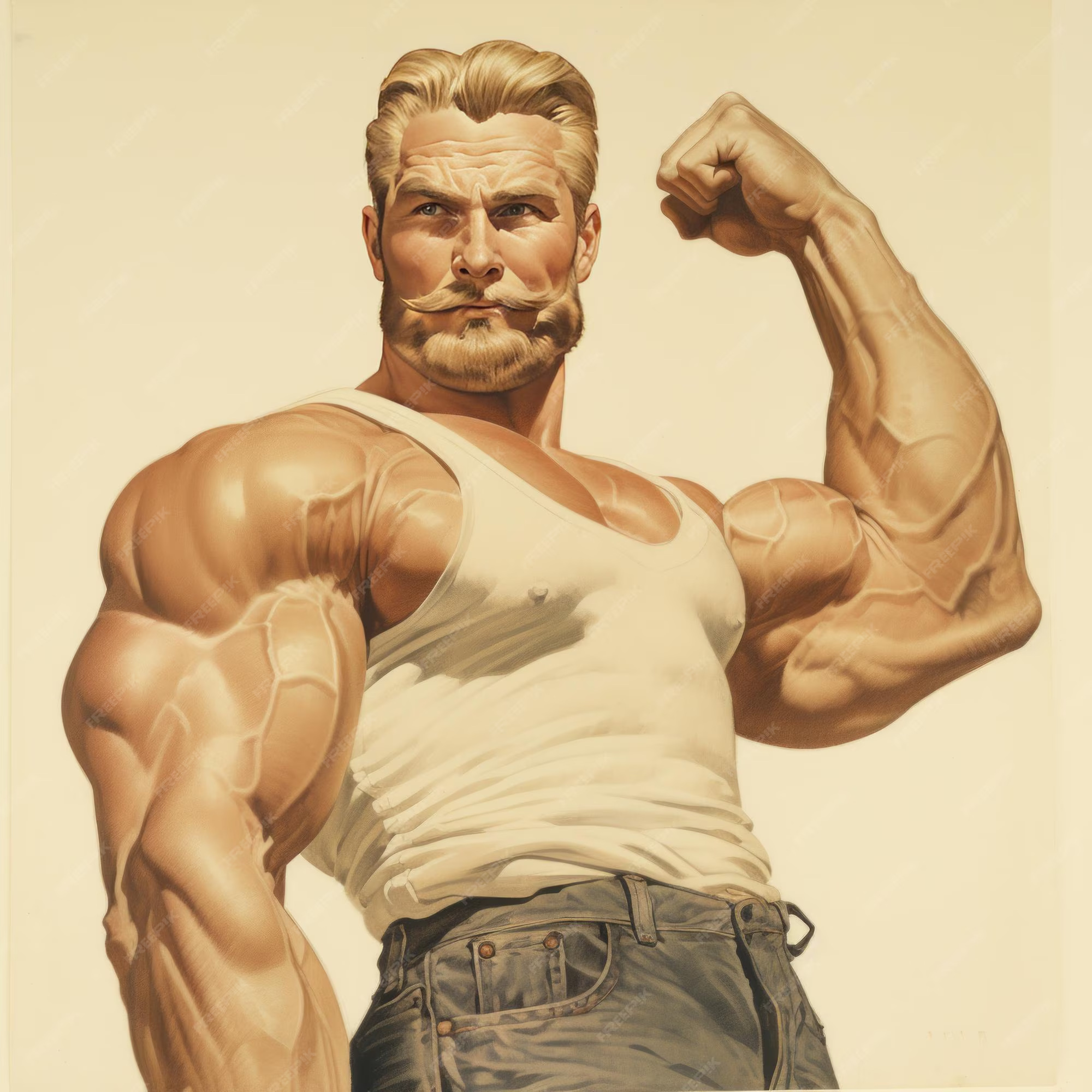
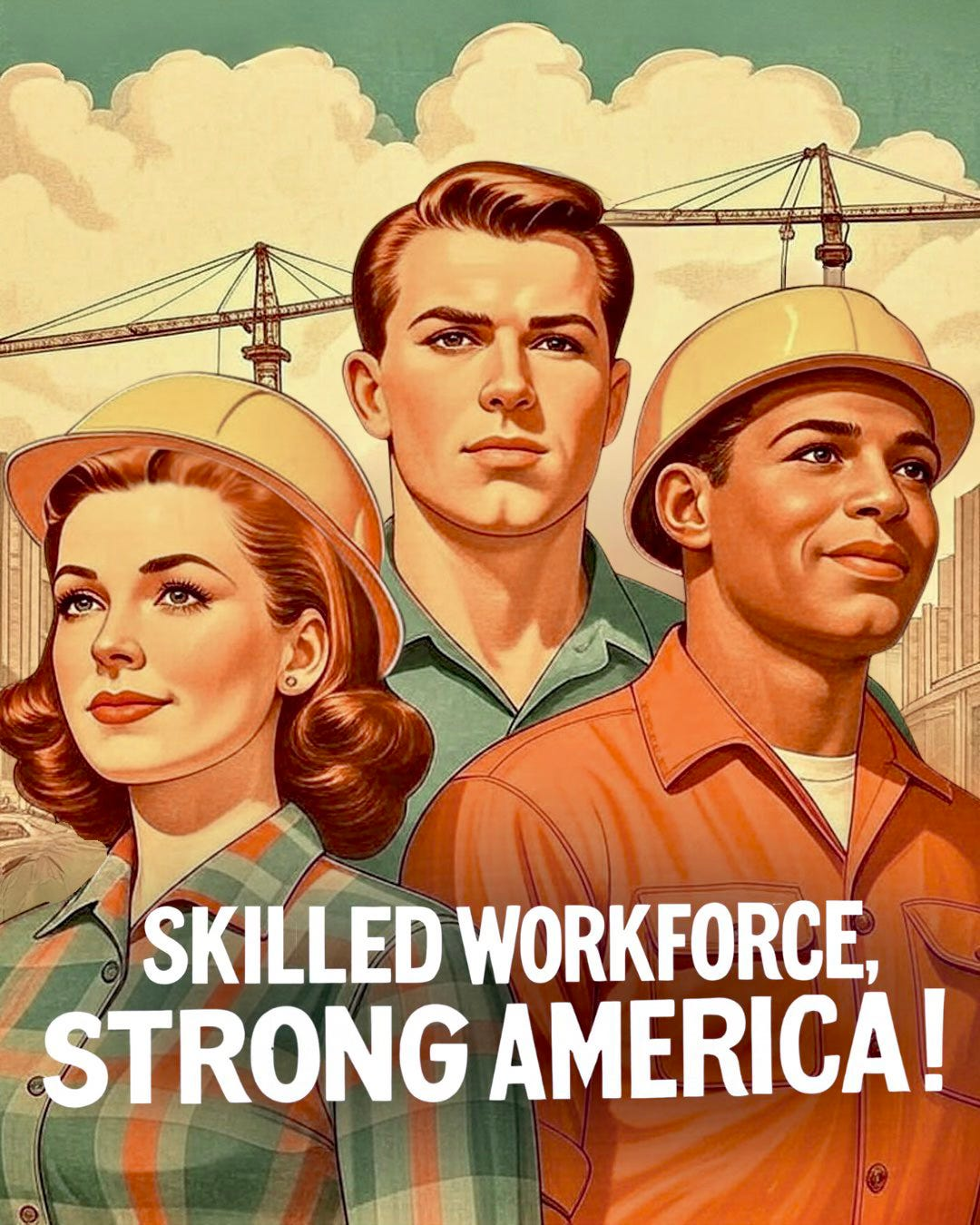
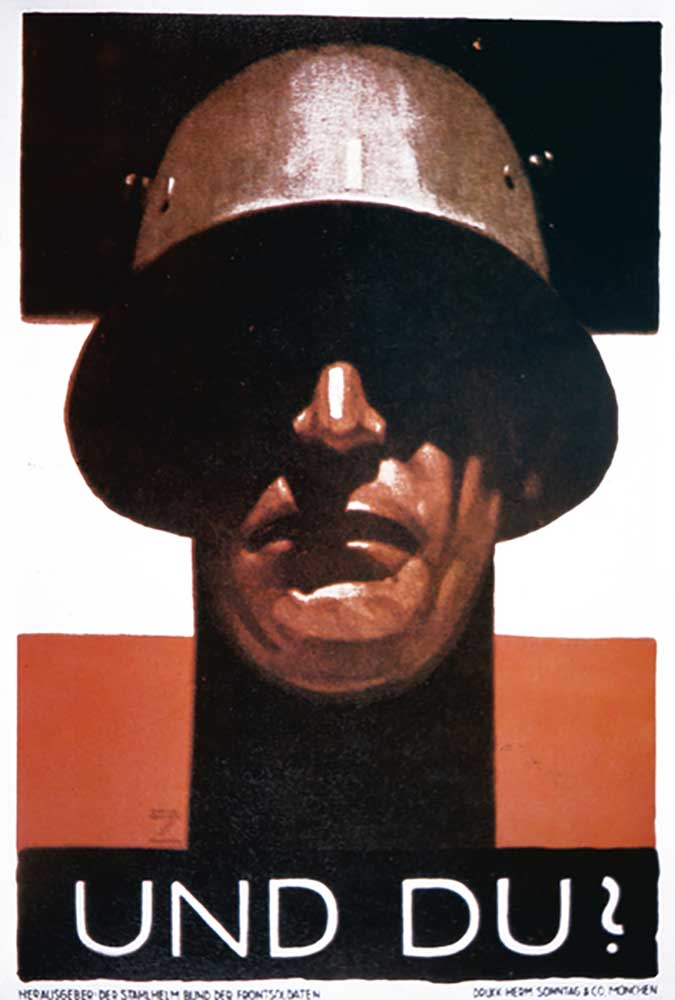
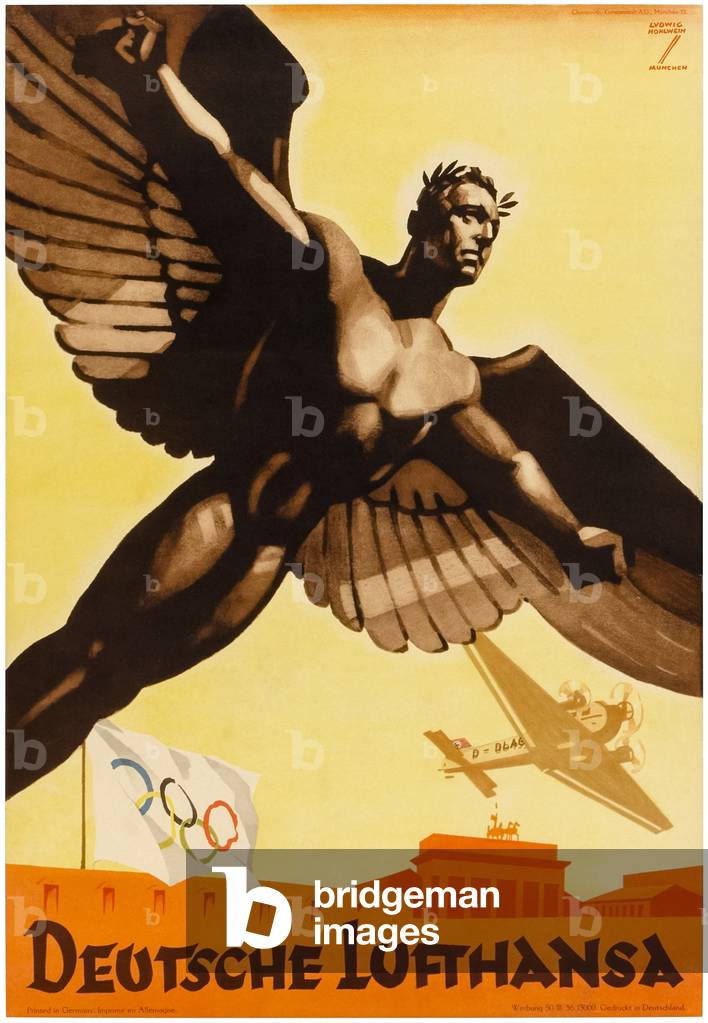
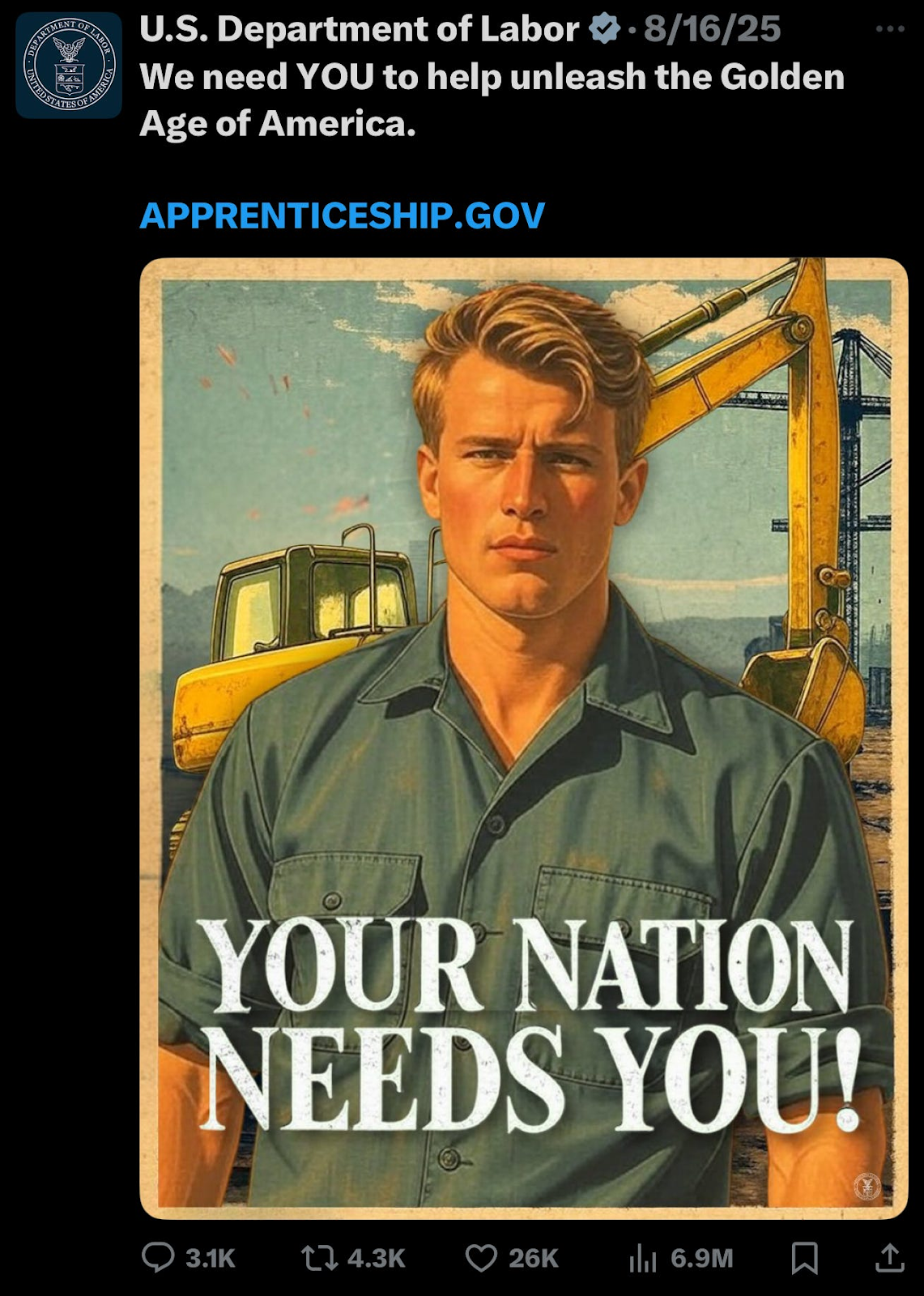
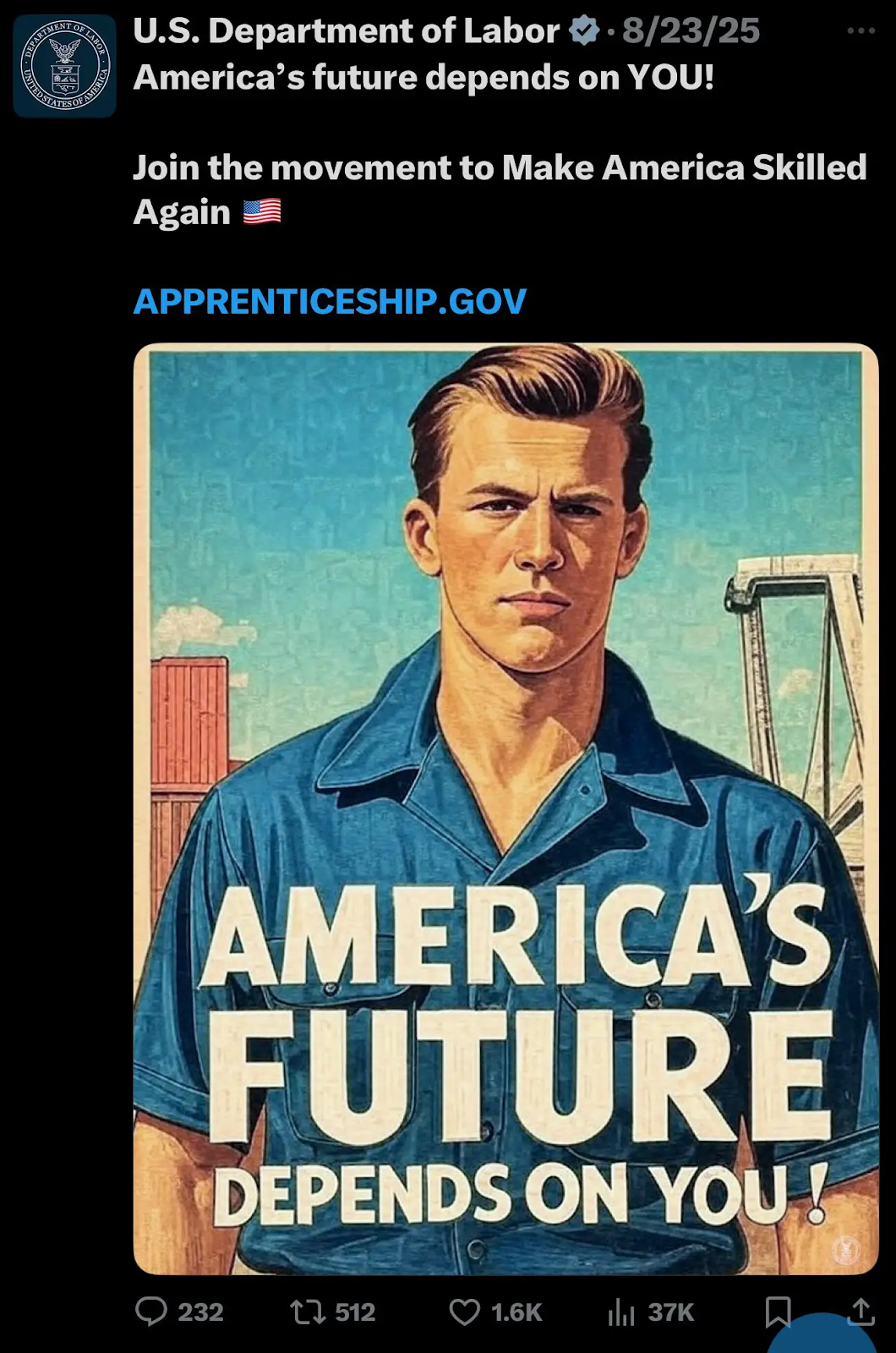
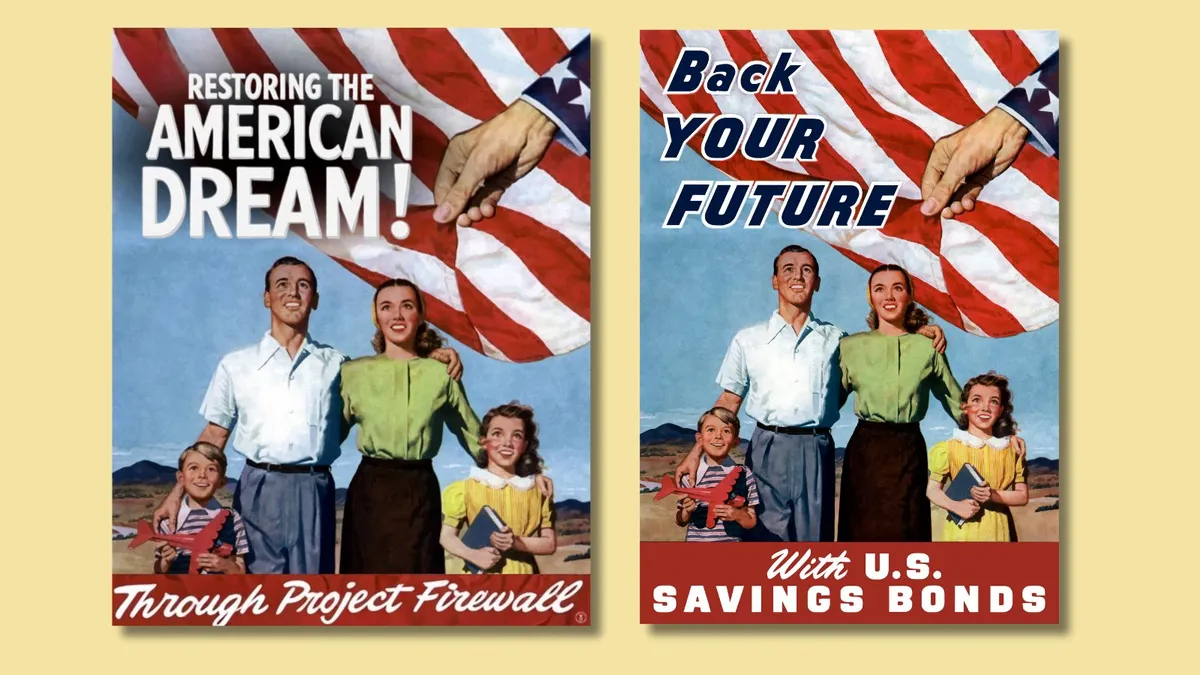
Image References
First Row (L - R):
Aryan ideal, Iconic Representation of German masculinity. Propaganda poster 1940s germany. Freepik. Accessed March 4, 2026
Franks, Nehemiah, “White House Posters Recall Nazi-Style Propaganda, Exclude Women and People of Color, The Black Wall Street Times, September 10, 2025. Accessed March 3, 2026.
Ludwig Hohlwein, “Und Du?” (And You?) poster, 14-40. 1932. Meggs, Philip B., and Alston W. Purvis, Megg’s History of Graphic Design, Sixth Ed., NJ: John Wiley & Sons, Inc. 2016. 304.
Second Row (L-R):
Meggs, Philip B., and Alston W. Purvis, Megg’s History of Graphic Design, Sixth Ed., NJ: John Wiley & Sons, Inc. 2016. 304.
Bridgeman Images, https://www.bridgemanimages.com/en-US/
Franks, Nehemiah, “White House Posters Recall Nazi-Style Propaganda, Exclude Women and People of Color, The Black Wall Street Times, September 10, 2025. Accessed March 3, 2026.
U.S. Dept. of Labor. Facebook. Accessed March 3, 2026.
Third Row:
Franks, Nehemiah, “White House Posters Recall Nazi-Style Propaganda, Exclude Women and People of Color, The Black Wall Street Times, September 10, 2025. Accessed March 3, 2026.
U.S. Dept. of Labor. Facebook. Accessed March 3, 2026.